


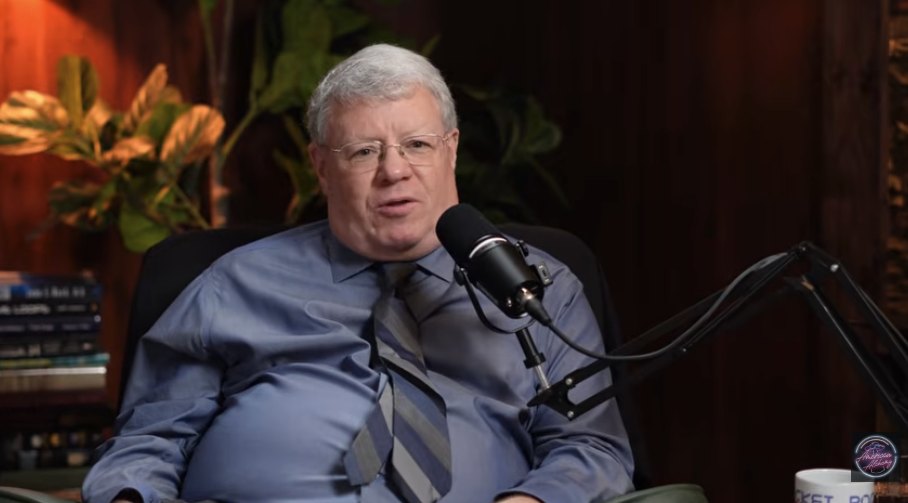
Kevin Knuth is not what people expect when they imagine a “UFO guy.” He’s soft-spoken, methodical, almost disarmingly calm—the kind of physicist who lowers the temperature in a room simply by asking better questions. And yet, quietly, he’s done more to advance a serious engineering-level discussion of UFOs than almost anyone since the early Cold War.
Knuth’s work doesn’t start with belief. It starts with constraints: acceleration limits, power requirements, momentum exchange, thermodynamics. Instead of asking what are they, he asks what would have to be true for these objects—if the data is taken at face value—to behave the way they do. The answers are uncomfortable. Not because they’re mystical, but because they imply technologies far beyond publicly acknowledged human capability.
That discomfort helps explain the long arc of suppression surrounding UFO information. For decades, the phenomenon sat at the intersection of national security, aerospace secrecy, and cultural ridicule—a perfect storm for institutional silence. The result wasn’t a single grand cover-up, but a slow, systemic dampening of curiosity. Careers stalled. Data vanished. Questions became radioactive.
Disclosure, for Knuth, isn’t spectacle. It’s overdue housekeeping.
That ethos—treating the unknown as a solvable problem rather than a punchline—is a major inspiration behind X66. Not because answers are guaranteed, but because refusing to ask has consequences. At a critical moment in human history, curiosity itself may be the most suppressed technology of all.
Most days, Lily doesn’t think about where she lives. On an asteroid. In a city controlled by nano-scale machines. Erase My Head — the first novel in the X66 Storyverse... Coming Feb 10 to Amazon.
File Under: #UAP, #UFO, #uapdisclosure, #endgovernmentsecrecy, #truthembargo, #disclosure, #X66